
What is Capacitor Plague? The Hidden Killer of Electronics
Learn about capacitor plague, the widespread manufacturing defect that killed millions of electronics in the 2000s, and how it still affects devices today.
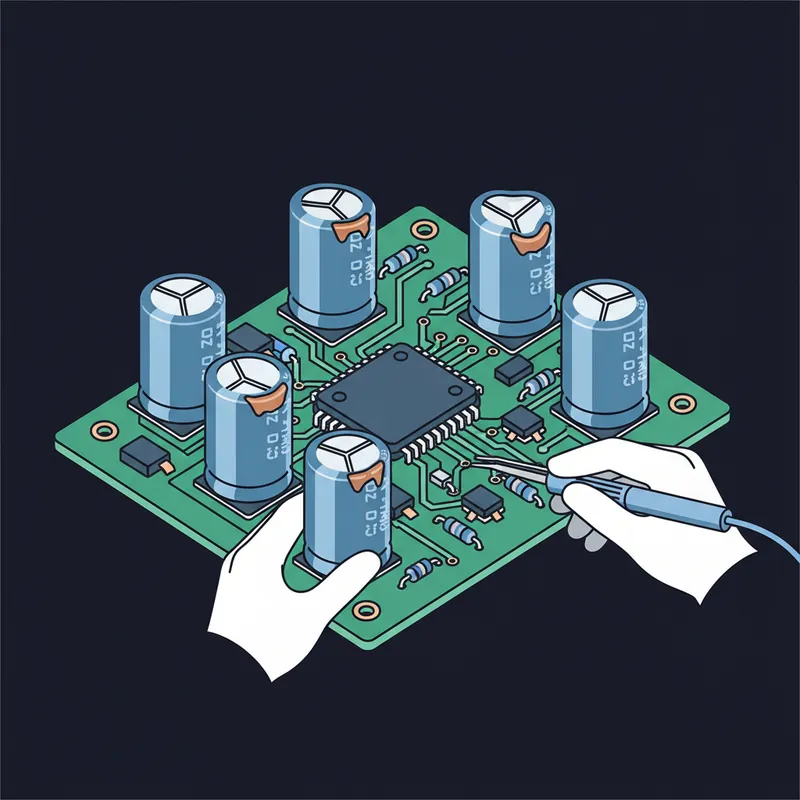
If you’ve ever had a computer, TV, or other electronic device mysteriously die after a few years of reliable service, you may have been a victim of “capacitor plague.” This widespread manufacturing defect affected millions of devices from roughly 1999 to 2007 - and its effects are still showing up today.
What Are Capacitors?
Before understanding capacitor plague, it helps to know what capacitors do:
- Store and release electrical energy
- Smooth out voltage fluctuations
- Filter electrical noise
- Found in virtually every electronic device
- Critical for stable operation
Electrolytic capacitors are particularly important in power supplies and motherboards. They contain liquid electrolyte that allows them to store significant charge in a small package.
The Capacitor Plague Incident
What Happened
In the late 1990s, industrial espionage led to a stolen electrolyte formula being shared among Taiwanese capacitor manufacturers. Unfortunately, the formula was incomplete or incorrectly copied.
The problem:
- Missing or incorrect stabilizing agents
- Electrolyte broke down over time
- Produced hydrogen gas inside capacitors
- Caused capacitors to bulge, leak, or explode
- Widespread component failures
Scale of the Problem
The defective capacitors found their way into:
- Dell, HP, and other major computer brands
- Numerous motherboard manufacturers
- Power supplies
- LCD monitors
- Television sets
- Industrial equipment
- Automotive electronics
Billions of devices were affected worldwide. Some estimates suggest the problem caused over $100 million in warranty repairs for major manufacturers.
Identifying Bad Capacitors
Visual Signs
Look for these telltale symptoms:
Bulging tops:
- Capacitor tops should be flat
- Bulging indicates internal pressure
- Imminent failure likely
Leaking electrolyte:
- Brown or orange crusty residue
- Often around capacitor base
- May have chemical smell
Completely blown:
- Vent marks visible on top
- Capacitor may be open or split
- Obviously failed
Behavioral Symptoms
Your device may exhibit:
- Random shutdowns or restarts
- Failure to boot
- Instability under load
- Gradually worsening performance
- Complete failure to power on
Devices Commonly Affected
Computers (1999-2007 era)
- Desktop motherboards
- Graphics cards
- Power supplies
- LCD monitors
Notable examples:
- Many Dell Optiplex systems
- Various ASUS and Gigabyte motherboards
- Numerous power supply brands
Consumer Electronics
- LCD and plasma TVs (especially Samsung, LG)
- DVD players
- Audio receivers
- Game consoles (some Xbox 360 issues)
- TiVo and similar devices
Still Showing Up Today
While the original “plague” ended around 2007, the affected devices are still failing:
- Stored equipment being put back in service
- Devices that ran intermittently
- Equipment in climate-controlled environments lasting longer
- Replacement parts using old stock
Can Capacitor Plague Be Fixed?
Yes, absolutely. Capacitor replacement is one of the most common and successful electronics repairs:
The Repair Process
- Identify failed capacitors visually
- Note specifications (voltage, capacitance, temperature rating)
- Source quality replacement capacitors
- Desolder failed components
- Install new capacitors with correct polarity
- Test device operation
Success Rate
When caught before other damage occurs:
- Very high success rate
- Cost-effective repair
- Often extends device life significantly
- Quality capacitors can outlast originals
When It’s Too Late
Capacitor failure can cause secondary damage:
- Voltage irregularities damage other components
- Electrolyte leakage corrodes traces
- Prolonged operation with bad caps causes additional failures
- Sometimes total board replacement needed
Prevention and Quality
Buying Quality Capacitors
For repairs, use reputable brands:
- Nichicon
- Panasonic
- Rubycon
- United Chemi-Con
- Nippon Chemi-Con
Avoid no-name capacitors from questionable sources.
Modern Manufacturing
Today’s quality capacitors are much more reliable:
- Solid polymer capacitors increasingly common
- Better quality control
- Improved electrolyte formulas
- Longer-rated lifespans
Our Capacitor Replacement Services
We regularly repair capacitor plague victims:
- TV capacitor replacement - Restore dead or failing TVs
- Computer motherboard repair - Fix failing desktops
- Power supply rebuild - Replace all capacitors preventively
- Audio equipment recap - Restore vintage and modern receivers
- Diagnostic services - Identify capacitor-related issues
Capacitor replacement is one of our specialty services. We use only quality Japanese capacitors and test thoroughly after repair.
Is Your Device a Victim?
If you have electronics from the 2000s era that are showing signs of instability or failure, capacitor plague could be the culprit. Many of these devices can be economically repaired.
Have a device you suspect has bad capacitors? Bring it in for evaluation and we’ll diagnose the problem and discuss your repair options.
Tags:
Need Professional Help?
If you've tried these troubleshooting steps and your device still isn't working, we're here to help. Bring it in for a free diagnosis - we'll figure out what's wrong and give you a clear estimate before any work begins.
Get a Free Diagnosis