
Vintage Tube Amp Troubleshooting: What You Can Check (and What You Shouldn't)
Vintage tube amplifier acting up? Learn safe troubleshooting steps for common tube amp problems - and when to bring it to a professional.
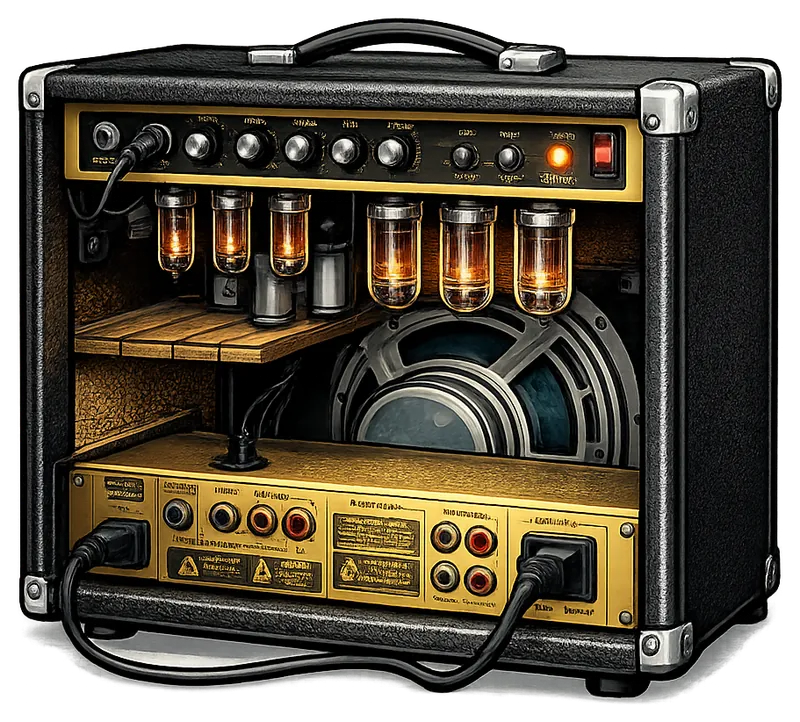
Vintage tube amplifiers are special. They produce a warm, rich sound that modern solid-state equipment struggles to replicate. But when something goes wrong with a tube amp, troubleshooting requires knowledge of high-voltage electronics and a healthy respect for the dangers involved.
Critical Safety Warning
Tube amplifiers contain lethal voltages. The power supply capacitors in a tube amp can hold 400-500 volts (or more) even when the amp is unplugged. This voltage can kill you.
Do not open the chassis unless you:
- Are trained to work with high-voltage equipment
- Know how to safely discharge capacitors
- Have the proper tools and equipment
- Understand the specific amplifier’s circuit
The troubleshooting steps in this guide are limited to safe, external checks that anyone can perform without opening the amplifier.
Basic External Checks
Before assuming something is broken, check the obvious:
Power Issues
Amp won’t turn on at all:
- Check that it’s plugged in (yes, really)
- Try a different outlet
- Check the fuse (if externally accessible)
- Look for a power switch on the back panel
Fuse keeps blowing:
- This usually indicates a serious problem
- Don’t keep replacing fuses hoping it will work
- Bring it in for diagnosis
Connection Issues
No sound from one channel:
- Check speaker connections
- Try swapping left and right speaker cables
- Test with a different audio source
- Try headphones (if the amp has a headphone jack)
Intermittent sound:
- Check all cable connections
- Try wiggling cables while playing music (gently)
- Clean RCA jacks with contact cleaner
- Check for corroded speaker terminals
Tube-Related Problems
Identifying Bad Tubes
Tubes are the most common point of failure in vintage amplifiers, and they’re also the safest component for users to check and replace.
Signs a tube may need replacement:
- Visible cracks or broken glass
- Loose base or pins
- No glow at all (most tubes should glow faintly)
- Excessive brightness or red glow (tube is failing)
- Microphonic noise (amp makes noise when you tap the chassis)
Safe Tube Testing
You can often identify a bad tube by careful observation and swapping:
- Visual inspection: With the amp on, look for tubes that aren’t glowing (no heat) or are glowing too brightly
- Tap test: Gently tap each tube with a pencil eraser. Microphonic tubes will cause noise through the speakers
- Swap test: If you have matched tubes (like pairs of output tubes), swap them between sockets to see if the problem moves
Tube Replacement
Replacing preamp tubes (usually smaller 12AX7, 12AT7, 12AU7 types) is generally safe to do yourself:
- Turn off the amp and unplug it
- Wait 5 minutes for tubes to cool
- Gently rock the tube back and forth while pulling straight up
- Insert new tube, aligning pins with socket holes
- Press firmly until seated
Output tube replacement is more complex and may require biasing. Incorrect bias can damage tubes or the amplifier. If you’re not comfortable with this, bring it to us.
Common Problems and What They Mean
Hum or Buzz
60Hz hum (constant tone):
- Ground loop (try different outlet, check cables)
- Failing filter capacitor (requires professional repair)
- Bad preamp tube
120Hz hum (different pitch):
- Usually indicates failing filter capacitors
- This is a common repair for vintage amps
Crackling or Popping
Random crackling:
- Dirty tube sockets (can sometimes be cleaned)
- Failing tube
- Dirty potentiometers (volume/tone controls)
- Bad capacitor or resistor
Crackling when adjusting controls:
- Dirty potentiometer - try spraying with contact cleaner
- Worn potentiometer may need replacement
Distortion When It Shouldn’t Be There
Distortion on one channel:
- Bad preamp or driver tube
- Failing coupling capacitor
Distortion on both channels:
- Output tubes may be worn or mismatched
- Incorrect bias
- Power supply issues
Reduced Volume or Power
Both channels weak:
- Worn output tubes
- Power supply issues
- Rectifier tube (if tube rectified) may be weak
One channel weak:
- Bad preamp tube
- Problem in that channel’s circuit
What You Can Service Yourself
- Tube replacement (preamp tubes are straightforward; output tubes may need biasing)
- Cleaning controls with contact cleaner (spray through any openings without disassembly)
- Cleaning tube sockets - can sometimes be done with contact cleaner spray
- Checking and cleaning connections - RCA jacks, speaker terminals
- Fuse replacement (if externally accessible and you’re using the correct rating)
What Requires Professional Service
- Anything inside the chassis - Don’t open it
- Capacitor replacement - Filter caps commonly fail in vintage amps and hold lethal charge
- Biasing output tubes - Incorrect bias damages tubes and transformers
- Power transformer or output transformer issues - These are expensive to replace
- Resistor replacement - May indicate larger problems
- Any modification or upgrade - Should be done by someone who understands the circuit
When to Bring It In
Definitely bring your tube amp in if:
- It’s blowing fuses
- You smell burning or see smoke
- There’s no sound and tube swapping didn’t help
- There’s excessive hum that isn’t a ground loop
- The amp is making popping sounds when not playing music
- Output tubes are glowing red
- You want to have it checked out before using it for the first time
Why We Love Tube Amp Repair
We especially love working on vintage tube equipment. There’s something satisfying about bringing a 50-year-old amplifier back to life and hearing it produce that warm, rich sound again.
Common services we perform:
- Tube testing and replacement - We have a tube tester and stock common tubes
- Capacitor replacement - Essential for vintage amps to prevent damage
- Bias adjustment - Proper biasing extends tube life
- Full restoration - Getting your amp back to factory specs
- Modifications and upgrades - Done properly and reversibly
If you have a vintage tube amp that needs attention, bring it in. We’ll diagnose it for free and give you honest advice about whether repair makes sense and what it will cost. Many vintage amps are absolutely worth restoring - they were built better than most modern equipment and can last another 50 years with proper care.
Tags:
Need Professional Help?
If you've tried these troubleshooting steps and your device still isn't working, we're here to help. Bring it in for a free diagnosis - we'll figure out what's wrong and give you a clear estimate before any work begins.
Get a Free Diagnosis